
Running a Sex Offender Check in Orange County
The primary channel is the Florida Sexual Offenders and Predators Search. FDLE publishes data supplied by sheriffs, corrections agencies, motor-vehicle officials, law enforcement, and registrants. Select Orange in the county filter for a countywide list. A name search works best when the spelling is known. Neighborhood search is more useful for a home, school route, park, or other address because it uses the distances currently offered by the live form.
Orange County has no separate public list that replaces FDLE. OCSO serves as the local registration partner, while FDLE administers the public database. City and ZIP filters can narrow results, but postal cities and city boundaries do not always match. If the concern involves another state, add the national search. When a result looks wrong or a person appears noncompliant, use the FDLE reporting line or contact law enforcement. Do not attempt a personal confrontation.
Orange County Registration Through OCSO
People with Florida reporting duties register through the sheriff under FDLE rules. In Orange County, the OCSO Sex Offender Unit provides the current local procedure. Call the Orange County Sheriff's Office directory at 407-254-7000 and ask for that unit's current registration location, appointment process, and verification instructions. Those details can change, so the main directory is safer than relying on an old office address.
The sheriff gathers and verifies information required by law, then the state portal presents the public record. A city police department can take an emergency report or a report of suspected unlawful conduct. It does not replace the sheriff for registration or FDLE for correction of the statewide profile. This division matters across Orange County because registry administration, local response, and public database publication are three different jobs.
OCSO Sex Offender Unit
Request current registration and verification instructions through the OCSO agency directory.
407-254-7000
Note: Call before traveling because Orange County registration locations and appointment rules may change.
Searching the Florida Sexual Offenders and Predators Search
Start on the official FDLE interface and accept its conditions. Search controls support a known-person check as well as location-based community awareness. The workflow below keeps identity matching and address context separate.
- Open FDLE's search and choose the search type that fits the question: offender, neighborhood/address, university, or another option shown.
- For a person, enter the exact surname and first name. For a location, enter the full address and choose a radius offered by the form.
- Use Orange County, city, ZIP, type, or status filters to narrow the list, then compare aliases and physical identifiers.
- Open the full profile. Read its legal status, address type, reporting dates, vehicles, and qualifying offense before saving a dated flyer.
The FDLE registry search screen shows the official controls used for an Orange County sex offender check.
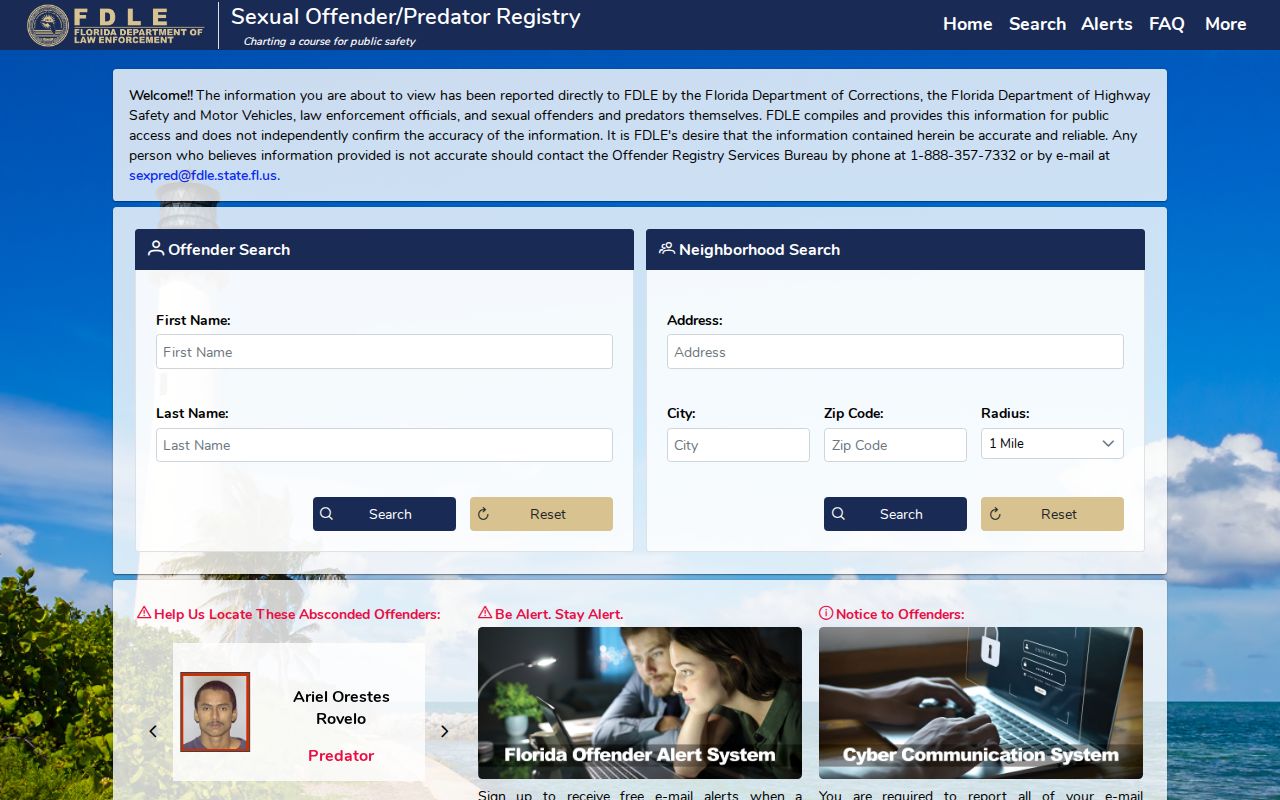
Its separate person and location paths help prevent a broad county list from being mistaken for an exact address inquiry.
| Field Label | Type | Required | Notes |
|---|---|---|---|
| Last / First Name | Text | Conditional | Use for a known person; profiles may show aliases. |
| County | Dropdown | No | Select Orange to localize results. |
| City / ZIP | Text | No | Useful filters, but boundaries can differ. |
| Address | Text | Conditional | Starting point for neighborhood search. |
| Radius | Dropdown | Conditional | Use a distance offered by the current form. |
| Type / Status | Filter | No | Filters offender, predator, and displayed status. |
| Search / Reset | Buttons | Not applicable | Returns map and list results. |
Orange County Registry Accuracy Limits
FDLE states that contributing agencies and registrants report the data and that FDLE does not independently verify every item. That warning affects how Orange County results should be read. A map pin is not proof that a person is present at that exact moment. A temporary or transient address has a different meaning from a permanent address. Reporting dates, custody status, and aliases may explain an apparent mismatch.
Check the profile, not just the result card. Compare the photograph, age, physical details, aliases, and legal status. The neutral FDLE result and profile interface shows how these fields appear without making a private registrant the focus.
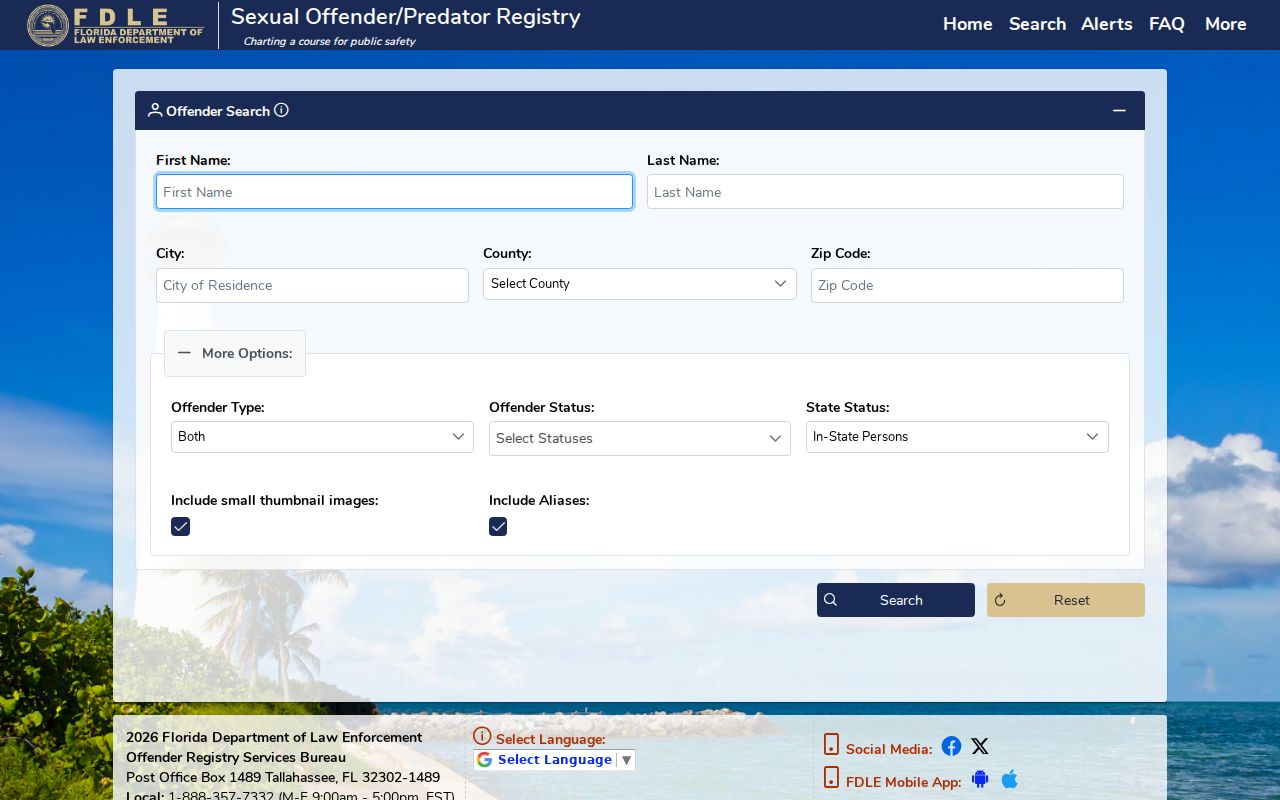
Those extra fields help distinguish people with similar names and put a listed Orange County address in its proper status context.
For an error, suspected noncompliance, or an absconded label, call FDLE at 1-888-357-7332 or notify local law enforcement. Use a court file to research the underlying conviction because a public registry profile is not the complete prosecution record.
What a Registry Profile Shows
A public FDLE profile combines identity fields, registration facts, addresses, legal status, and the qualifying offense. Not every field appears in every Orange County record. The inventory below describes the types of information documented in the official interface without retaining a private person's identity.
| Name and aliases | Current name and alternate names reported to the registry. |
|---|---|
| Photo and description | Photographs, birth date or age, sex, race, height, weight, hair, eyes, scars, marks, and tattoos. |
| Addresses | Permanent, temporary, or transient locations and the address type shown by FDLE. |
| Vehicles and vessels | Reported vehicle or vessel details that aid identity and safety awareness. |
| Offense | Qualifying offense, jurisdiction, statute, conviction facts, and victim category where displayed. |
| Designation | Florida sexual offender or sexual predator status, not a federal tier shortcut. |
| Legal status | Labels may include absconded, confinement, civil commitment, or FDC/DJJ supervision. |
| Registration data | Registration dates, supervision details, and print or flyer controls. |
A saved flyer is only a snapshot. Recheck the live Orange County registry before relying on an address or legal-status label.
Orange County and National Searches
FDLE is the best source for Florida registration details and Orange County filters. The Dru Sjodin National Sex Offender Public Website, often called NSOPW, searches participating public registries across jurisdictions. It is useful when a person recently moved, an address history crosses a state line, or a family safety check is not confined to Florida.
The official national interface illustrates that wider search layer.
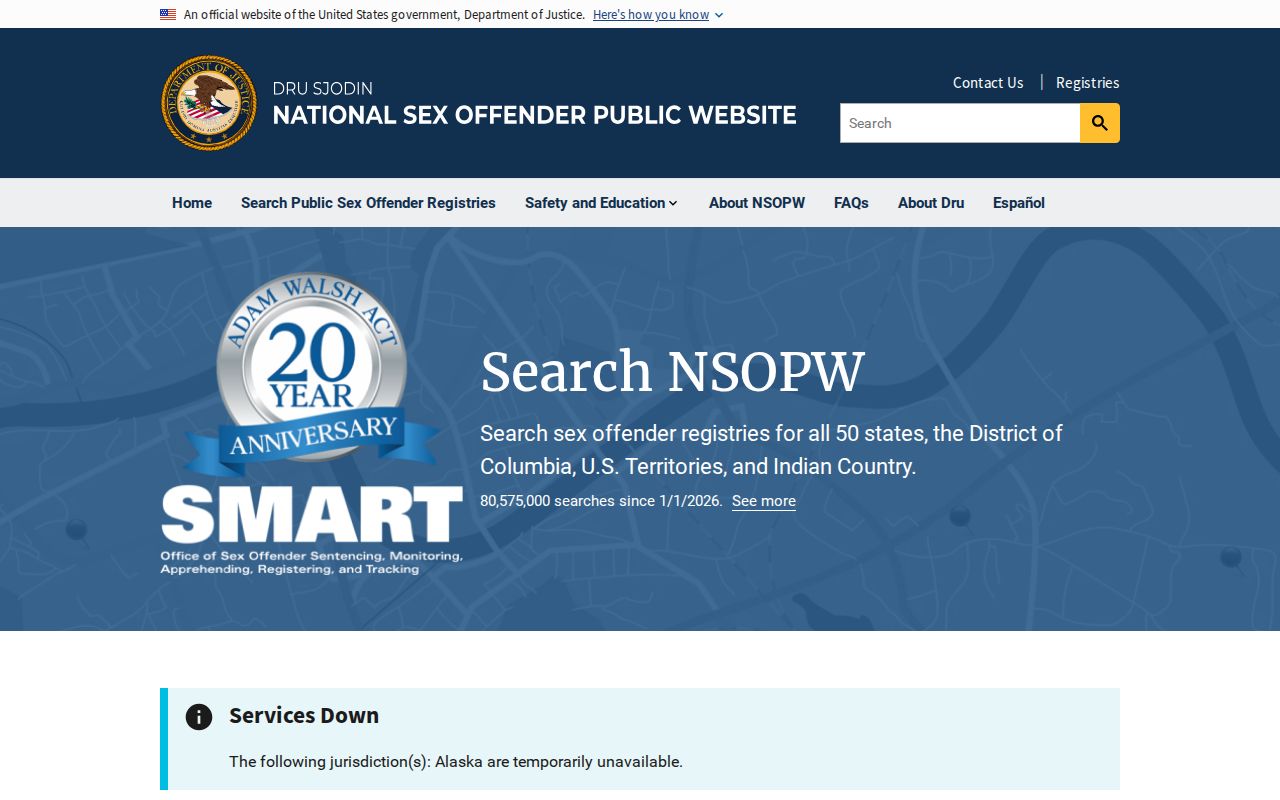
Return to FDLE for the Florida profile and to OCSO for Orange County registration instructions. NSOPW does not take over local reporting, correct Florida data, or confirm a person's presence at a location.
Registration Requirements and Levels in Florida
Florida does not present its registry as a simple public Tier I, II, and III system. It uses statutory categories and legal-status labels. A sexual predator is designated under the Florida Sexual Predators Act or a court process. A sexual offender meets a separate registration definition. Many duties last for life, but removal, exceptions, and verification frequency depend on the exact qualifying law and record.
| Designation or status | Public meaning | Duration and frequency caution |
|---|---|---|
| Sexual offender | Meets a listed Florida registration definition. | Often lifetime, but removal and exceptions require statute-specific review. |
| Sexual predator | Court or statutory designation under §775.21. | Enhanced verification and community notice; not automatically federal Tier III. |
| Absconded | No longer at the last reported address. | Report useful information; never confront the person. |
| Confinement | In custody while registration duties remain relevant. | Custody and address status can change. |
| Civil commitment | Held through the Jimmy Ryce civil commitment process. | Not the same as a new criminal conviction. |
| FDC/DJJ supervision | Under community monitoring by the named agency. | Supervision and registry duration are separate questions. |
The governing provisions include section 943.0435, the Florida Sexual Predators Act, and section 944.607. Read the qualifying record before drawing a conclusion about duration.
Orange County Address Alerts
FDLE offers email alerts as part of its registry channels. For ongoing Orange County neighborhood awareness, use the current alert tool when offered and define the address or area with care. Alerts are more useful than repeating a one-time search because registrations, temporary addresses, confinement, and legal status can change.
When an alert arrives, open the live FDLE profile. Check the address type, reporting date, designation, and legal status before acting. A postal city label may not match municipal limits. An overlapping map pin can also hide another result. If the notice suggests an urgent threat, call law enforcement. For a possible data error or registration violation, use the FDLE hotline at 1-888-357-7332. Registry alerts support planning and awareness; they are not proof that a new crime occurred.
Reading Orange County Offender Status Labels
Legal status gives an Orange County registry result needed context. “Absconded” means the person is no longer at the last reported address. It calls for a report to FDLE or law enforcement, not a search or confrontation by a resident. “Confinement” means the person is in custody while still subject to registry duties. “Civil commitment” refers to detention through the Jimmy Ryce process and is not a new conviction. An FDC or DJJ supervision label identifies the agency monitoring the person in the community.
These labels can change independently of the original qualifying offense. Registration duration, supervision, custody, and current address are separate facts. Read each field and its date before interpreting a map result. If the label conflicts with a known current fact, call 1-888-357-7332 and provide the profile details. FDLE and the Orange County sheriff can review reported information through official channels.
Note: A status label describes the registry record; it does not replace the underlying Orange County court file.
Lawful Use and Community Notification
Florida makes registry information public to support safety awareness and lawful community notification. Orange County residents may use profiles and address alerts to understand the area around a home, school route, or other place. The information should be read with FDLE's accuracy warning and current status fields. It must not become a tool for threats, intimidation, harassment, or vigilantism.
Florida Statutes section 943.043 governs public access and misuse consequences. Separate rules, including section 856.022 and local restrictions, may address specified proximity or conduct. Do not infer a residence violation from a map radius alone. Ask the proper agency or a Florida lawyer about the law that applies to a specific location.
Registry misuse is a crime: Florida law prohibits using registry information to threaten, intimidate, or harass a registrant or household. Report concerns to FDLE or law enforcement instead of confronting anyone.