
How to Check Criminal History in Ocoee
Ask Ocoee Police for an OPD-created report. The department accepts requests through NextRequest and at its records counter, as well as by mail, email, phone, and fax. County corrections is the source for a booking or current custody. The Clerk's my eClerk system shows prosecution events and outcomes. FDLE provides the official statewide history product and a separate fingerprint-based personal review route.
Use this sequence so one missing screen does not end the search:
- Identify whether Ocoee Police or another agency answered the call.
- Request the report with its number, date, nature, location, and involved people.
- Check county booking sources when an arrest led to custody.
- Search my eClerk for filed charges, court events, and disposition.
- Use FDLE when statewide scope or review of your own identity-matched record is required.
An OPD report may precede a court case. Charges can also change after the prosecutor reviews the arrest.
Ocoee Accepts Six Request Channels
Ocoee Police receives public-record requests through its lobby, postal mail, email, phone, fax, and the police NextRequest portal. The portal is useful for a trackable submission. The printable form supports the other channels and shows which details help staff search. Florida law does not normally require a requester to identify themselves, though contact information is useful for mail or follow-up.
| Request detail | Purpose |
|---|---|
| Report number and date | Direct match when known |
| Nature and location | Separates similar incidents |
| Individuals involved | Supports name matching |
| Address and phone | Used for mail or clarification when supplied |
| Format and delivery | Helps staff estimate copy, media, and postage costs |
Never use the record form to report an emergency or a new crime. It is a disclosure channel for existing agency material.
The Ocoee Police Department
Ocoee Police is at 646 Ocoee Commerce Parkway, Ocoee, FL 34761. Records staff can be reached at 407-905-3162, opd.records@ocoee.org, or fax 407-905-3153. The lobby operates weekdays from 8 a.m. to 5 p.m., with the payment window closing at 4:30 p.m. General administration is 407-905-3160. OPD keeps only OPD records. An Orange County Sheriff's Office incident must go to OCSO.
The official Ocoee public-record page explains these contacts and channels.
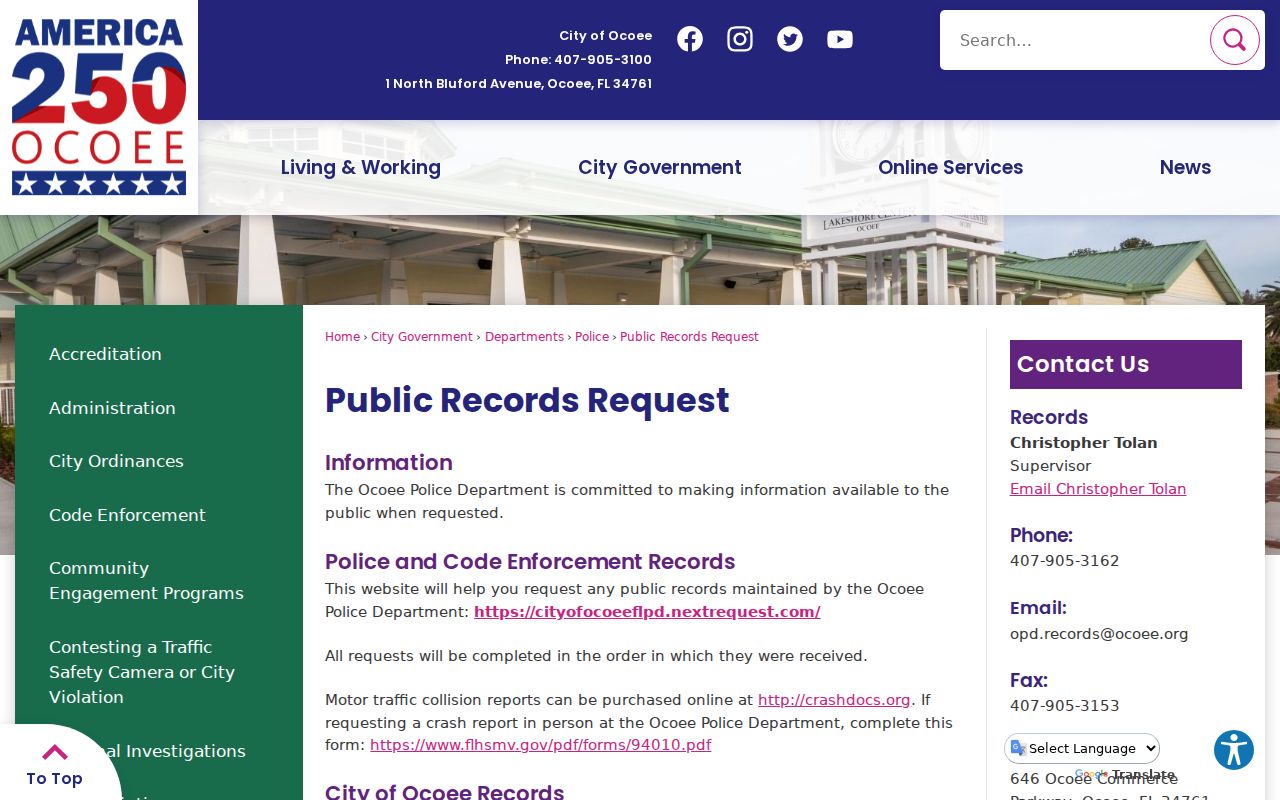
This is the best source for current timing, costs, and payment directions. Giving the responding agency and a precise place prevents avoidable routing delays.
Ocoee Report Timing Is Two Steps
The city says a police report is generally releasable five to seven business days after it is made. It also says requests aim for completion in ten to fifteen business days, depending on approval, queue, and volume. Those are different milestones. The first concerns whether the report has reached a releasable stage. The second concerns processing the public-record request.
A longer wait does not itself mean the report was denied. Staff may review active-investigation content, juvenile material, victim identifiers, or protected personal details. Ask for a status through the same request channel and keep the request number. If material is withheld, the custodian should cite the exemption.
For a time-sensitive need, ask first whether inspection or a partial release is possible. A narrow date, place, and report type can reduce review work while preserving the later request for any remaining releasable pages.
Arrests and Bookings in Ocoee
Ocoee arrestees go to Orange County Corrections. The county current inmate system updates every 30 minutes and removes people after release. The Daily Booking List supplies a recent intake report and uses OCOEE PD as the arresting-agency label when appropriate. Neither product is a city conviction list.
For the police narrative, ask Ocoee Police. For booking and custody, use Corrections. For formal charges and disposition, search the Clerk. The distinction matters when a booking charge differs from the later information filed by the State Attorney. The Orange County arrest history page gives the county-wide custody route without turning the city page into a jail guide.
Read Ocoee's Crime Map Carefully
Ocoee's official ArcGIS service exposes reported-event fields such as offense or call ID, address, municipality, district, neighborhood, ZIP, report dates and times, UCR and NIBRS codes, crime category, location, weapon, status, relationship, and entry method. It supports sorting and pagination and caps a response at 1,000 records. Those structured fields help place incidents in local context.
The official Ocoee crime-map service documents the schema.
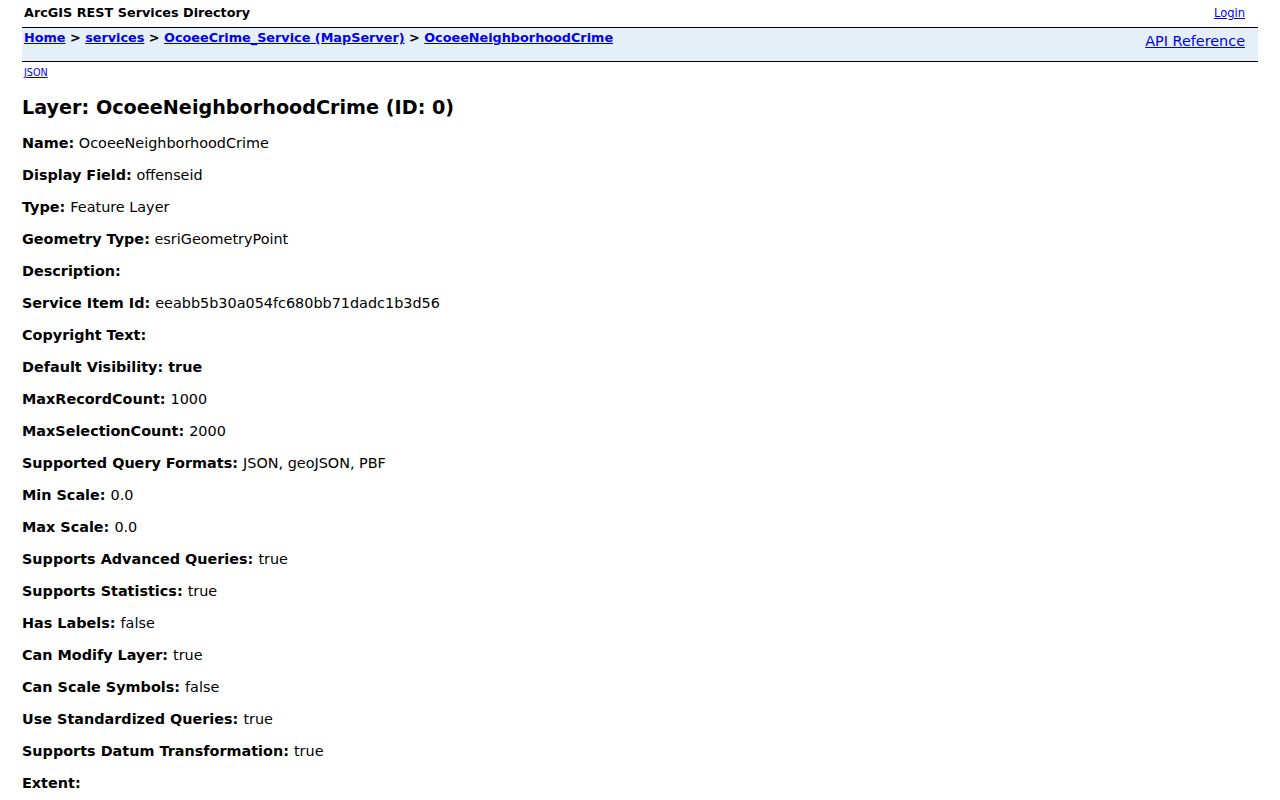
A map point is not proof of an arrest, charge, or conviction. Use its report identifiers to request the underlying OPD record, then check the court separately if a prosecution followed.
Ocoee Municipal Court Records
Ocoee has no municipal criminal court. Florida abolished the remaining municipal courts by 1977. County Court now hears misdemeanors and municipal-ordinance violations, while Circuit Court hears felonies. Criminal cases tied to Ocoee therefore appear through the Orange County Clerk, not a city docket.
| Court Name | Orange County Court and Circuit Court, Ninth Judicial Circuit |
|---|---|
| Case Types Heard | Municipal ordinance, misdemeanor, criminal traffic, and felony cases |
| Case Lookup Channel | my eClerk, Clerk record request, or Clerk counter |
| What the Docket Shows | Charges, parties, events, hearings, disposition, sentence, bond, and public images |
| Copies & Fees | Free online docket; requested and certified copies may have quoted charges |
My eClerk generally reaches about 1990, with many images beginning around 2009. Narrow a common-name search because results stop at 500.
Camera Hearings Are Not Criminal Court
Ocoee uses local hearing officers or special magistrates for traffic-camera and certain civil city matters. Those proceedings are not criminal prosecutions and should not be placed in an Ocoee criminal history as though they were County Court convictions. A camera hearing request must be made in writing within 60 days of notice.
The official camera hearing page explains the local route.
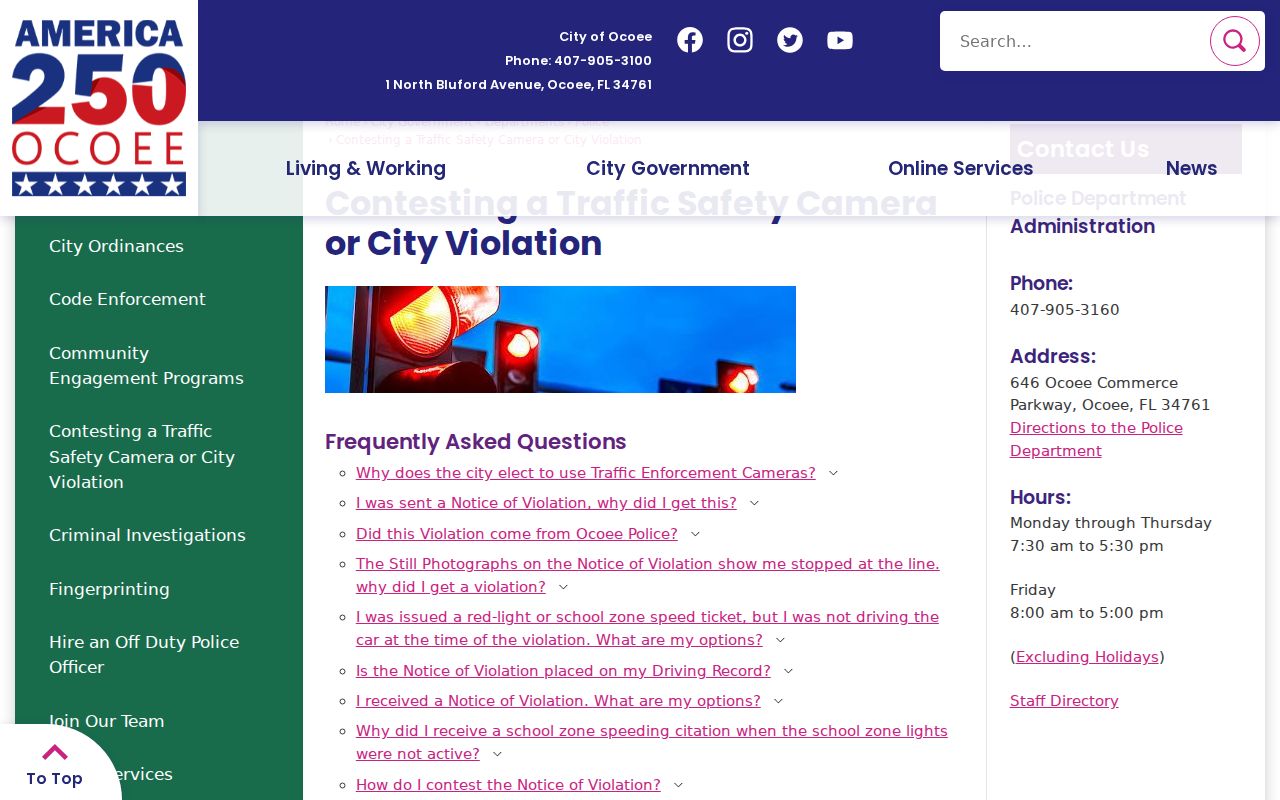
The affidavit lists a $10 filing fee and warns of a possible assessment up to $250 plus hearing costs. Follow the current notice. For a criminal citation, use the Orange County court docket instead.
Where Ocoee Records End Up
Ocoee Police retains the incident or arrest report. Orange County Corrections makes the booking record after intake. The State Attorney decides which charge to prosecute, and the Clerk records the docket, motions, hearings, disposition, sentence, and financial history. Fingerprints and reported outcomes move to FDLE.
Record flow: Ocoee PD › Orange County Courts › Florida Department of Law Enforcement
Each source measures a different point in time. The live jail list can change before a clerk case appears. A court file can remain after release. The FDLE history depends on identity matching and agency reporting. A mismatch calls for review of dates and identifiers, then a correction request to the office that made the disputed entry.
Ocoee Police Fees by Format
The city lists $0.15 for a single-sided page and $0.20 for a double-sided or color page through 8.5 by 14 inches. Certification is $1. A videotape or DVD duplicate is $1.50. Larger copies can be billed at actual cost, and mailed production adds postage plus a $2.50 handling charge. Verify current figures because staff time, media, and unusual formats can change a quote.
Cash, card, check, or money order are accepted through the stated city channels. Online and phone payments are not accepted, and card payments carry a service charge. A clear request can reduce search time and cost. Ask for an estimate before authorizing extensive work.
Ocoee Roads Shape Incident Locations
Ocoee's history began around Starke Lake and Lake Apopka, with citrus and vegetable agriculture. It gained municipal status in 1923 and city status in 1925. The city says its name comes from a Tennessee river and translates as apricot vine or passion flower. Later road projects changed its footprint: SR 50 opened in 1959, Florida's Turnpike in 1964, the western SR 408 extension in 1990, and SR 429 in 2000.
Those corridors make exact crash and incident locations important. Crash reports are confidential for 60 days except to authorized parties with identification and are obtained through CrashDocs or the FLHSMV process described by the city. The official Ocoee Police page provides department context.
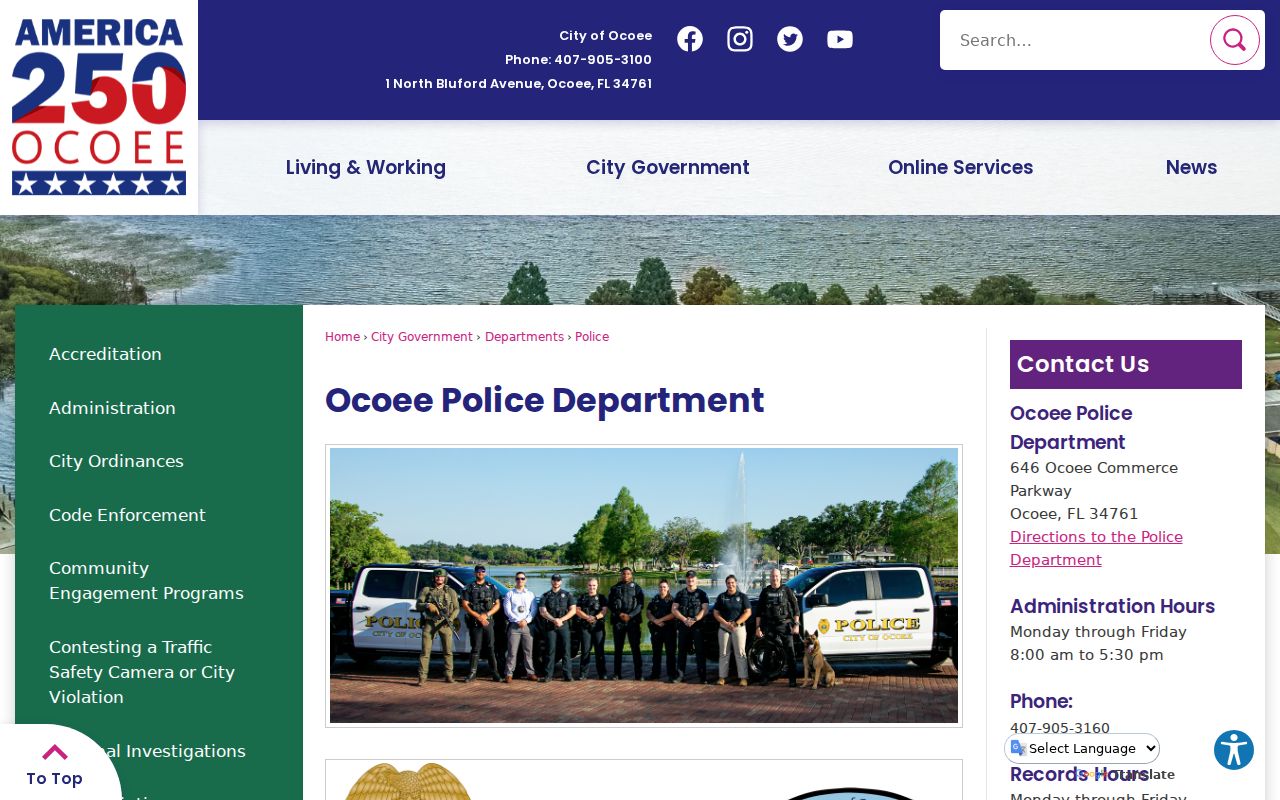
No official standalone police app was found. City alerts, NextRequest, and the browser-based ArcGIS map are the verified digital tools.
Public Access Rules
Florida's public-record rule favors access to nonexempt police material. A requester need not explain the purpose. Inspection can be free, while copies and extensive staff or technology use may bring lawful charges. Active-investigation information, juvenile files, victim identifiers, and protected personal data may be redacted. Court confidentiality follows its own statewide court rule.
Key Statutes:
Florida Statutes section 119.07 permits inspection and copying of nonexempt public records.
Florida Statutes section 943.053 controls FDLE criminal-history dissemination.
Florida Rule 2.420 governs confidentiality in court records.
Inspection can be the least costly option when a reader only needs to identify a page or date. Ask whether the record can be inspected before copies are ordered. For video, a large file, or a broad date range, request an estimate and narrow the scope by location, event type, or report number. Request certification only when a certified copy is needed.
Use the responding-agency rule. Ocoee Police cannot produce an OCSO report, and neither police agency replaces the Clerk for the complete criminal case.