
How to Check Orange County Criminal History
Start an Orange County criminal history search with the free my eClerk case search. It covers prosecutions filed in Orange County Circuit and County Courts. Search by name or case number, then open the docket to see filed charges, events, disposition, and available images. Docket information generally reaches back to about 1990, while most document images begin around 2009. Results stop at 500, so a common name needs a middle name, date of birth, year, or case type to keep the list useful.
Bring the full legal name, likely spelling variants, birth date if known, and a rough date range. A name match alone does not prove identity. Compare the case number, defendant details, filing date, charge, and court. The FDLE public criminal-history portal offers a statewide compilation, but it is not a substitute for reading the Orange County file.
Then decide what the record must answer. Current custody belongs with Corrections. The police narrative belongs with the agency that wrote it. A final case outcome belongs in the Clerk docket. Statewide reported history belongs with FDLE. This routing step keeps a narrow search from being mistaken for a complete Orange County record check.
- Choose Criminal Case Records or Search All in my eClerk.
- Enter a name, birth date, or exact case number, then narrow broad results.
- Match identifiers and open the docket rather than relying on the result line.
- Check current custody in the county inmate database and request the arresting agency's report when needed.
- Order a Clerk copy or an FDLE check when the purpose calls for an official record.
Search my eClerk Case Fields
The Orange County Clerk provides several ways into the same court index. Person searches accept first, middle, and last names, with date of birth as a useful filter. A known case number is faster. Citation and driver-license routes serve related traffic tools. Search type matters because a search limited to criminal cases will not show a civil or family filing with the same party name.
The official Clerk Criminal Division explains where criminal files are maintained. When an online image is missing, use the Clerk's court-record request or the counter in Suite 210 at the Orange County Courthouse, 425 North Orange Avenue, Orlando. The counter is open from 7:30 a.m. to 4 p.m., and the main number is 407-836-2000.
Read the register of actions in date order. An arrest charge can change when the State Attorney files an information, and one count can have a different result from another count in the same case. A balance, hearing entry, or open status is not itself a conviction. For an official paper copy, request the exact docket item or certified disposition instead of every document tied to a common name.
| Search field | Best use | Limit |
|---|---|---|
| Name and birth date | Finding a person's Orange County cases | Spelling and identity must be checked |
| Case number | Opening a known file | Requires the exact format |
| Case type and date | Narrowing common names | Results cap at 500 |
| Document image | Reading a filed instrument | Most images begin around 2009 |
The Orange County public-records page also shows the county's general custodian channels.
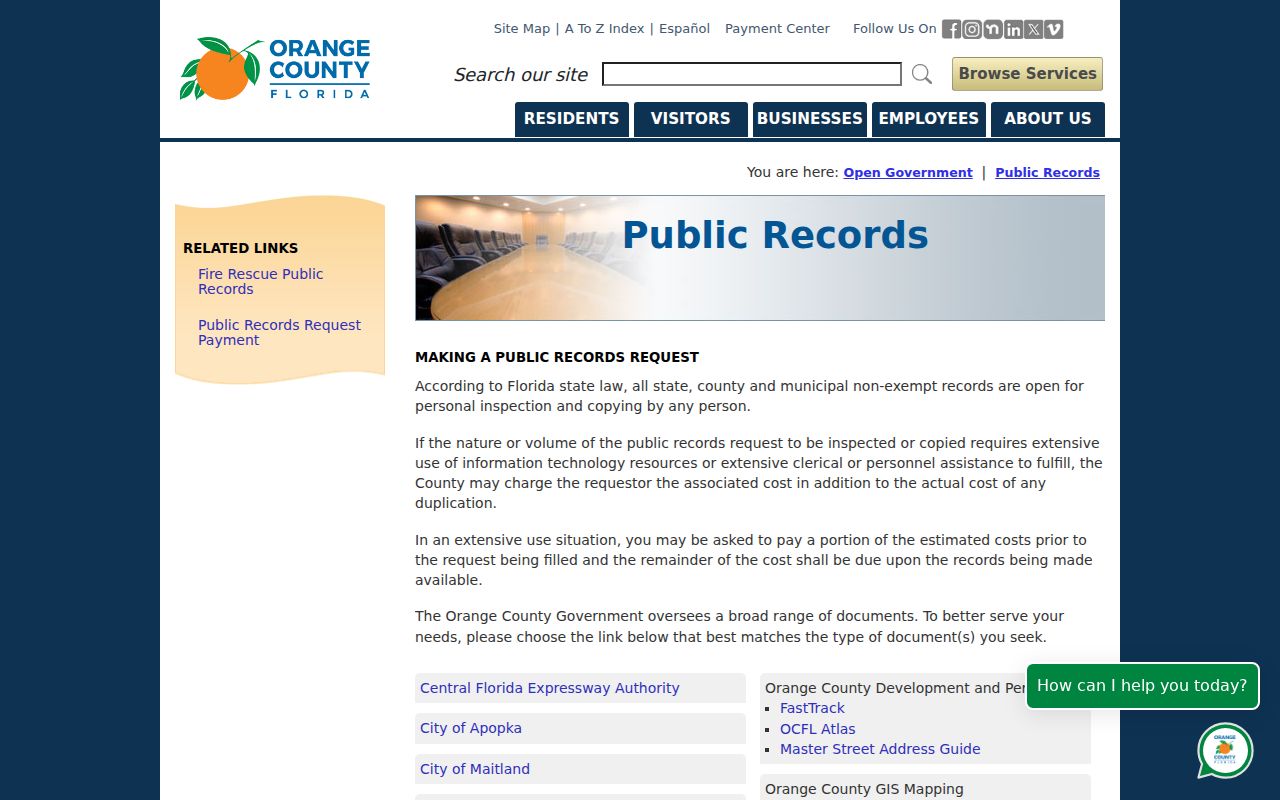
That channel is a county-department fallback, while court files still belong with the Clerk.
Official Florida Background Checks
The Florida Department of Law Enforcement, Division of Criminal Justice Information Services, maintains the central state repository. Any member of the public may order a name-based Florida criminal-history search through the FDLE portal for $25. Results depend on the identifiers supplied and the records agencies have reported. A nonmatch may reflect spelling, identity, timing, or reporting gaps rather than proof that no record exists.
A person reviewing their own identity-matched history can use FDLE's personal review and challenge process. Fingerprint checks for a law or licensing program travel through an FDLE-approved LiveScan provider and require the correct ORI, the code that tells the provider where the result must go. The requesting program supplies that code. OCSO public fingerprint appointments are a separate local service and should not be confused with every purpose-specific LiveScan check.
Name and fingerprint searches answer different identity questions. A name search uses the data entered and may return possible matches. A fingerprint search compares biometric identifiers through an authorized channel. Neither replaces the Orange County Clerk when the reader needs filings, hearing history, or a certified outcome from a local prosecution.
The FDLE ordering screen shows the official public name-search route.
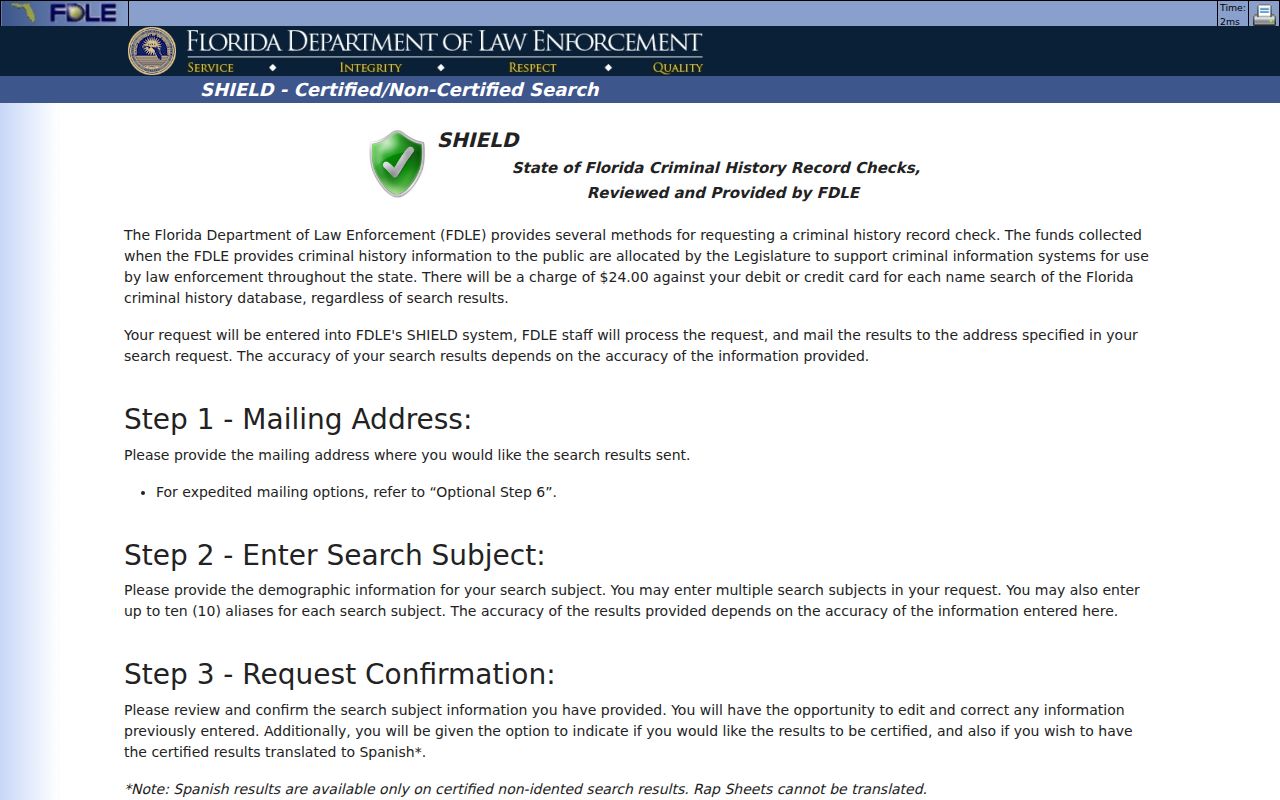
This state search adds Florida-wide reported history, while my eClerk supplies the local docket detail.
Orange County Jail Records Split
Orange County Corrections, not the elected Sheriff's Office, runs the jail. That local split changes where a request goes. The Current Inmate Database updates every 30 minutes and removes a person after release. The Daily Booking List preserves a recent intake report, and the daily First Appearance List shows the first judicial review. Inmate Records Management at the Booking and Release Center, 3855 South John Young Parkway, handles current custody and court-status scheduling.
Corrections records requests go to the agency's fourth-floor public-records office at 3723 Vision Boulevard, Orlando, or to OCCDRecords@ocfl.net and 407-836-0321. OCSO holds sheriff-created incident and arrest reports. Its Records Section is reached at 407-254-7280. Asking the Clerk for a jail intake file or Corrections for a full prosecution docket sends the request to the wrong custodian.
For a request, list the date range, location, report or booking number, agency, and desired format. Florida law does not require a requester to state a purpose or use a special form. A clear description can cut search time and cost. Inspection may be free, but copies and extensive staff or technology work may be charged at lawful rates.
Clerk Criminal Division
425 N. Orange Avenue, Suite 210
Orlando, FL 32801
407-836-2000
Corrections Records
3723 Vision Boulevard, fourth floor
Orlando, FL 32839
407-836-0321
OCSO Records Section
P.O. Box 1440
Orlando, FL 32802-1440
407-254-7280
Types of Criminal Records in Orange County
Orange County criminal records are separate products created at different points. A police agency writes the incident report and arrest affidavit. Corrections creates a booking record after intake. The State Attorney chooses charges, and the Clerk keeps the court docket and filed documents. FDLE later compiles reported arrests and dispositions into statewide history. FDC keeps prison and felony supervision information, while FDLE maintains the sex offender and predator registry.
No one screen contains every part. A booking shows custody, not guilt. A court case shows prosecution and outcome, but may omit the full police narrative. An FDLE search spans Florida yet may lack a late or unmatched disposition. Orange County criminal history is most reliable when the record type matches the question.
Probation adds another split. FDC administers felony community supervision, while Orange County Corrections handles certain county community-corrections and pretrial programs. Parole decisions fall under the Florida Commission on Offender Review, with field supervision administered by FDC. The public FDC Offender Search can show prison and supervision data, not a complete county court file.
- Arrest and booking records show agency action and county intake.
- Criminal court files track charges, hearings, rulings, and disposition.
- FDLE history compiles reported statewide arrest cycles and outcomes.
- Warrant records may appear in the issuing case and OCSO channels.
- Supervision and registry records come from FDC and FDLE systems.
Orange County Warrant Search Limits
OCSO's Criminal Process Warrants Unit confirms active warrants around the clock for law-enforcement work, but the research did not identify a complete public name-search portal. A responsible Orange County warrant check starts with the issuing case in my eClerk, then uses OCSO records or warrant contacts and a public-record request if the docket does not resolve the question. Bench warrants arise from a court case, so the Clerk may show the event that produced one.
New, cleared, sealed, or juvenile warrants may not appear in a public result. Never treat a no-result screen as proof that no warrant exists. A person addressing their own possible warrant should confirm the case with the issuing court or qualified counsel before appearing at an office.
The OCSO Court Services and Communications Division describes the 24-hour warrant unit.
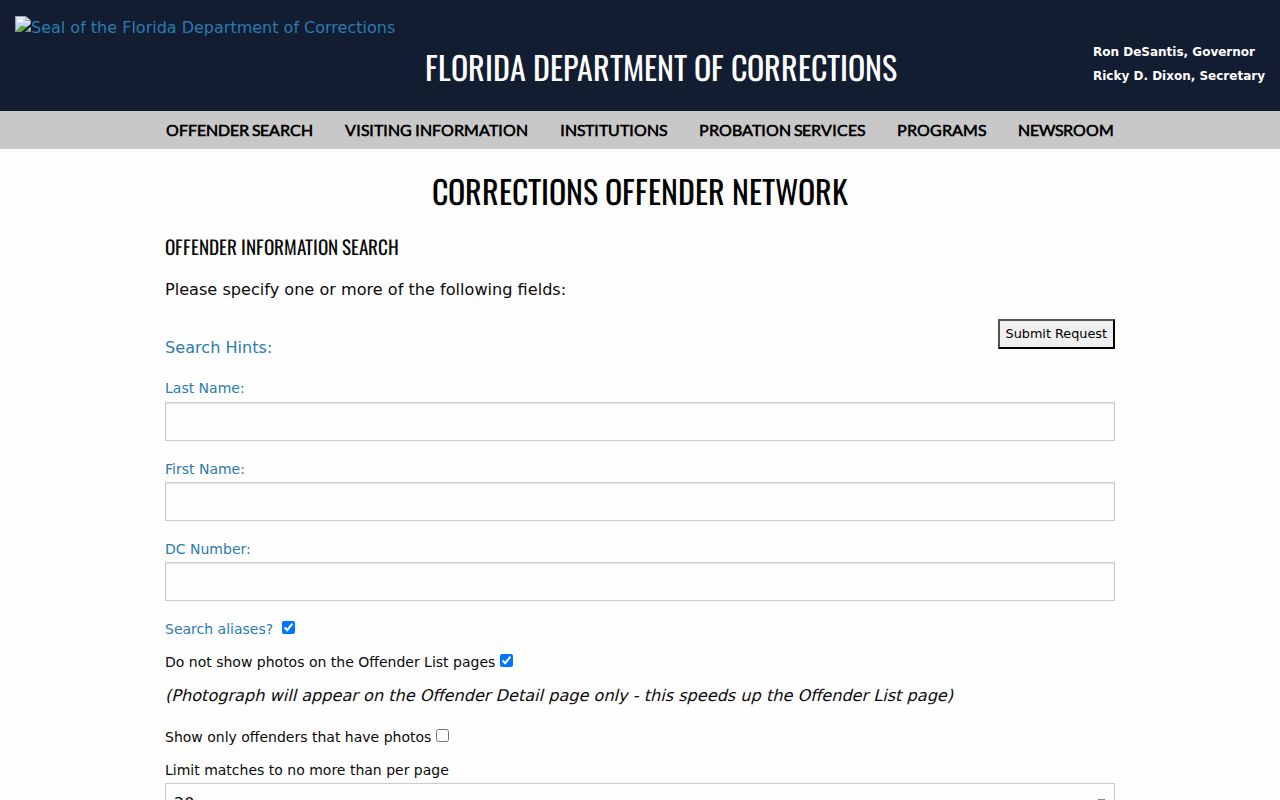
The pictured FDC search is for prison and supervision status, not an Orange County warrant clearance.
What an Orange County Criminal Record Shows
A useful Orange County criminal record links identity, event, charge, and outcome. The exact fields depend on the custodian. A booking entry can include an arresting agency, booking number, charge, bond, custody status, and photograph. A Clerk file adds case number, filing date, court division, docket events, disposition, sentence, and financial entries. FDLE groups reported arrest cycles and dispositions at the state level. Read each field in context and compare identifiers before assuming two similar names refer to the same person.
| Name & Identifiers | Names, date of birth, and other matching data vary by public system. |
|---|---|
| Arrest / Booking Data | Arresting agency, intake date, booking number, charge, and bond. |
| Charges & Statutes | Filed offense labels, degree, and Florida statute references. |
| Disposition | The court's outcome, such as dismissal, plea, or adjudication. |
| Sentence | Custody, supervision, costs, or other terms ordered by the court. |
| Custody / Supervision Status | Current jail, prison, release, or community-supervision information. |
Why Orange County Results Disagree
An arresting agency, Corrections, the Clerk, and FDLE update different systems on different schedules. The live jail list drops a person after release. A new arrest may appear before prosecutors file a case. A court disposition may reach FDLE later. Older dockets or images can sit outside my eClerk's usual electronic range. Sealing and expunction restrict lawful public access.
Use a simple flow when comparing an Orange County record: Arresting agency → Corrections booking → State Attorney charging decision → Clerk docket and disposition → FDLE repository update. A gap at one stage does not erase the others. If a record about you appears wrong, obtain the source file first. Ask the creating agency to fix its own data, use the Clerk for docket issues, and follow FDLE's personal review and challenge process for the state compilation.
- Disposition
- The court's final outcome for a charge or case.
- Docket
- The dated list of filings, hearings, and rulings in a court case.
- Arrest cycle
- The reported arrest and related charges and outcomes grouped in state history.
- Expunction
- A court-ordered remedy that removes eligible records from ordinary access under Florida law.
Public Access Laws for Orange County Criminal Records
Florida Public Records Law, chapter 119, and article I, section 24 of the Florida Constitution support inspection of nonexempt government records. A requester generally does not need to explain a purpose or use a special form. Inspection may be free, while copies and extensive staff or technology work can carry lawful charges. Agencies may redact active-investigation information, protected victim details, juvenile material, security plans, and personal identifiers, but should identify the exemption used.
Key Statutes:
Florida Statutes section 119.07 gives the right to inspect and copy nonexempt public records.
Florida Statutes section 943.053 governs FDLE criminal-history dissemination.
Florida Statutes section 943.0585 sets the court-ordered expunction framework.
Florida Statutes section 943.059 sets the court-ordered sealing framework.
Orange County Corrections Oversight
Orange County's jail is more than a sheriff roster. The county revived its Jail Oversight Commission in 2025 amid population, cost, and system-pressure questions. Inmate Records Management and Pretrial Services operate around the clock, linking booking, release, and current court-status work with the judiciary and Clerk. The local structure matters because Corrections records, OCSO reports, and Clerk dockets remain distinct even when they describe one event.
The Jail Oversight Commission page publishes the current commission material.
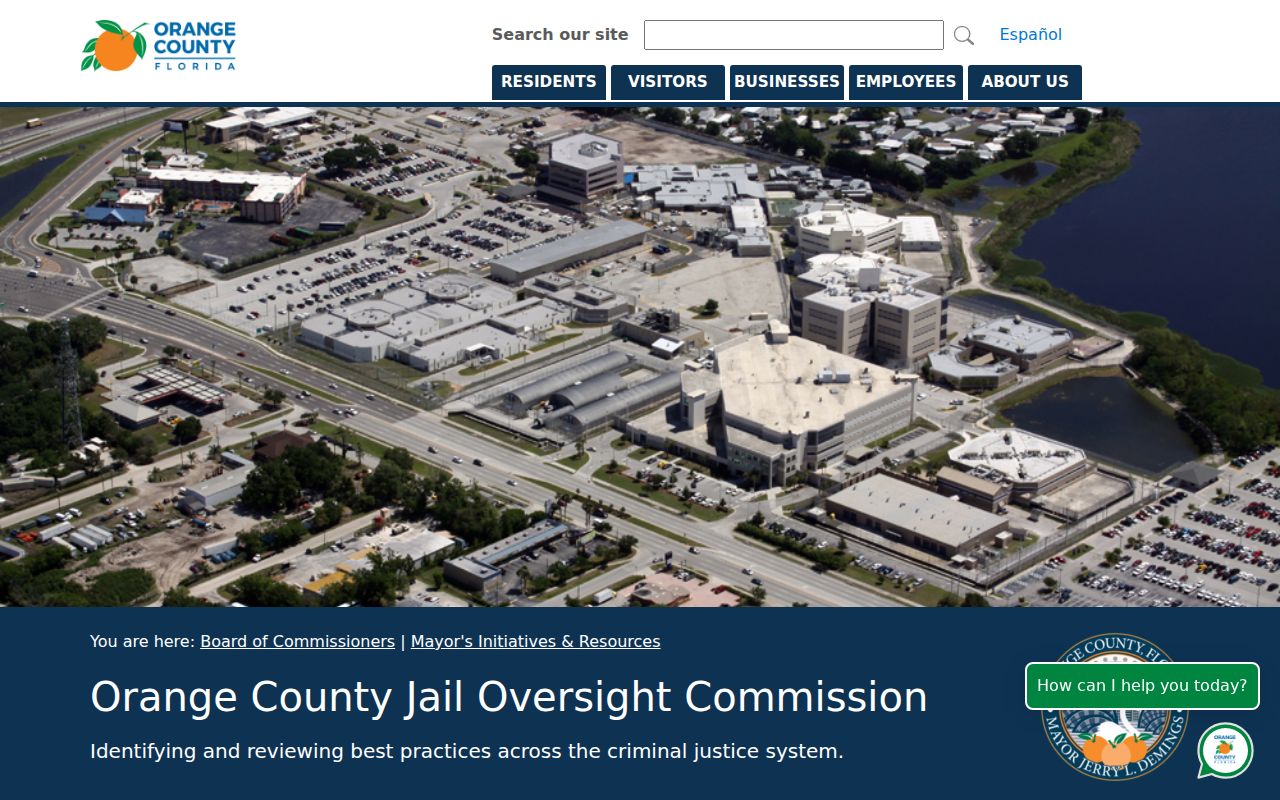
These materials add policy context, while a person's custody record still comes from the inmate database or Corrections custodian.
Orange County Arrest Report Pipeline
OCSO's 2024 annual report shows the scale behind local record access. The agency processed 39,088 arrest reports, handled 31,458 public-record requests, produced 43,237 requested items, answered 51,822 records calls, and served 12,233 records customers. It also submitted 13,604 cases to the State Attorney. These are agency workload figures for 2024, not counts of convictions or unique people.
The numbers explain why one Orange County event can produce several records. OCSO may hold the report, Corrections creates the booking file, the State Attorney reviews the case, the Clerk records the prosecution, and FDLE receives reported history. A request should name the needed product and custodian. Asking for an "arrest record" without a date, report number, location, or desired format may force staff to determine whether the requester means an affidavit, a booking entry, a court filing, or state history.
Note: OCSO workload figures are tied to its 2024 report and should not be read as current crime totals.
Sealed, Expunged, and Restricted Records
Florida provides court-ordered expunction and court-ordered sealing for eligible records, plus automatic and specialized remedies in limited situations. The FDLE certificate process comes before a court petition for the main remedies. Eligibility depends on the complete history and case outcome, so a missing online result does not establish that a record was sealed or expunged.
Juvenile files, victim information, active investigative material, and protected identifiers can also be confidential or redacted. Sealing restricts ordinary public access but may preserve access for agencies named by law. Expunction is also subject to statutory exceptions. Orange County petitions are filed through the court tied to the case after the required FDLE step.
| Item | Researched amount |
|---|---|
| FDLE public name search | $25 per search |
| FDLE eligibility certificate processing | $75 |
| Public-record inspection | May be free |
| Copies or extensive staff work | Lawful cost may apply |
Verify current charges before submitting payment because agency fees can change.
Federal Records Beyond Orange County
Federal prosecutions do not appear as Orange County Circuit or County Court cases. The Orlando Division of the U.S. District Court for the Middle District of Florida keeps local federal cases, while PACER supplies federal docket access. Federal custody belongs in the Bureau of Prisons locator. An FBI Identity History Summary is a subject-only route for a person reviewing their own federal identity-history record.
The Middle District of Florida gateway identifies the federal court and its divisions.
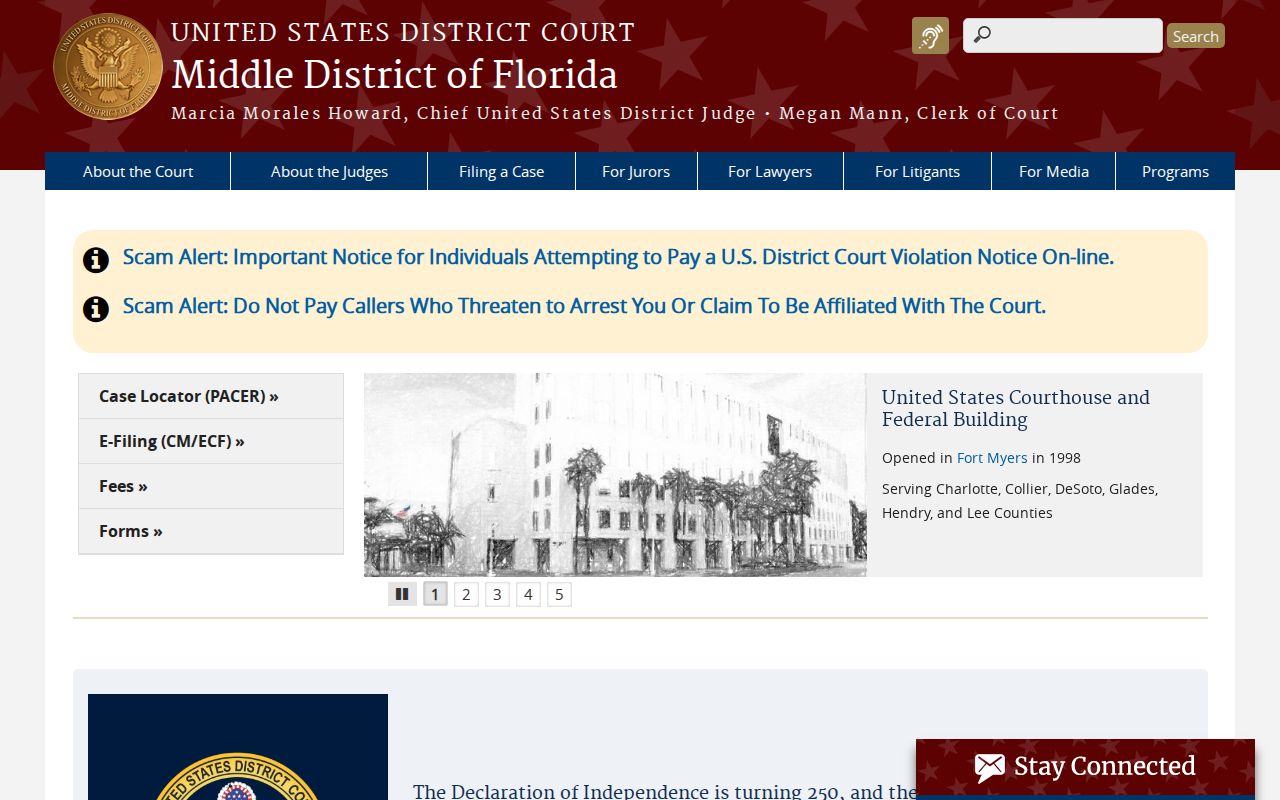
This court channel is separate from my eClerk and the Florida state repository.
The Federal Bureau of Prisons Inmate Locator handles federal custody searches.
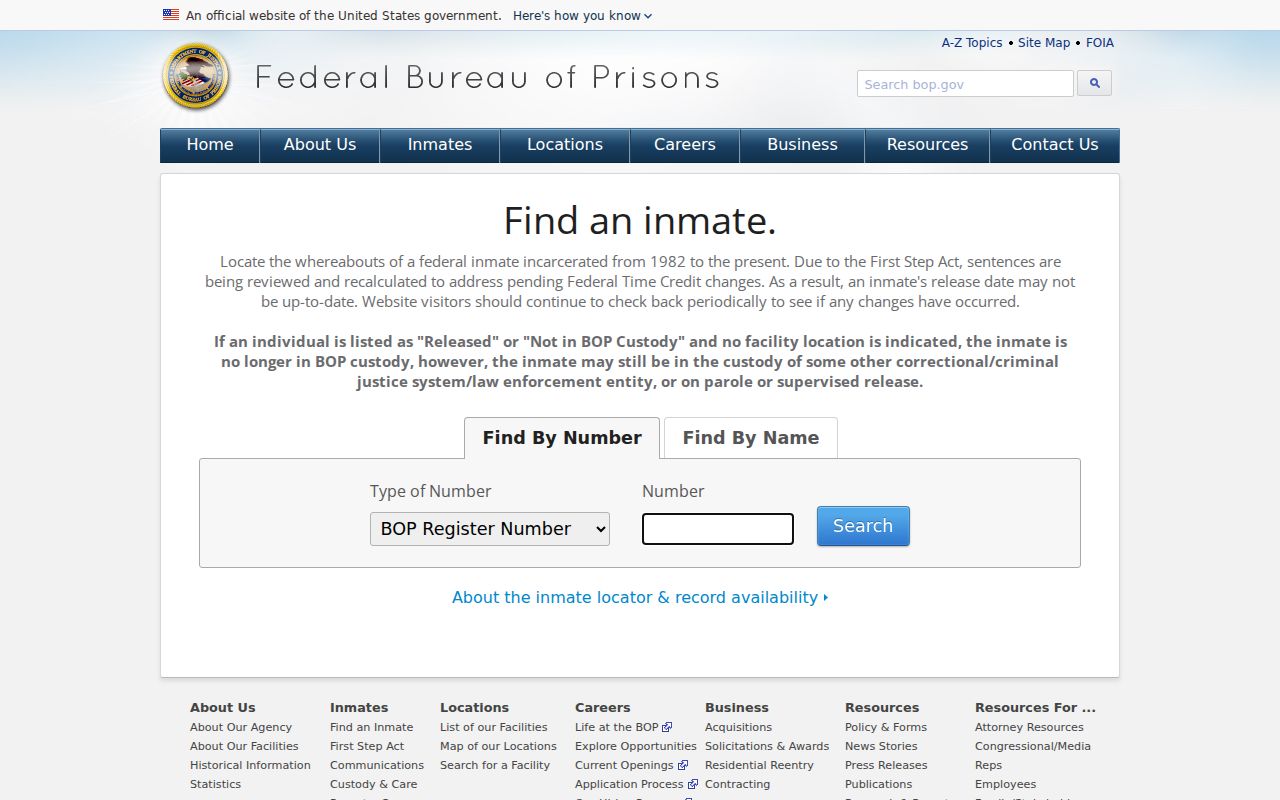
A federal inmate result does not describe the full prosecution, so use the federal docket for case events and outcome.
Criminal Records by City in Orange County
Orlando, Apopka, and Ocoee police departments keep their own incident reports, but their criminal cases and bookings move into Orange County systems. None has a standalone municipal criminal court. County Court hears misdemeanor and municipal-ordinance cases, while Circuit Court hears felonies. Start with the city police custodian for the narrative, my eClerk for prosecution, and Orange County Corrections for booking.
Orlando Criminal History
334,854 · OPD records route through the city request portal.
Apopka Criminal History
62,777 · APD reports use NextRequest and direct channels.
Ocoee Criminal History
51,932 · OPD reports and the city incident map serve different uses.